
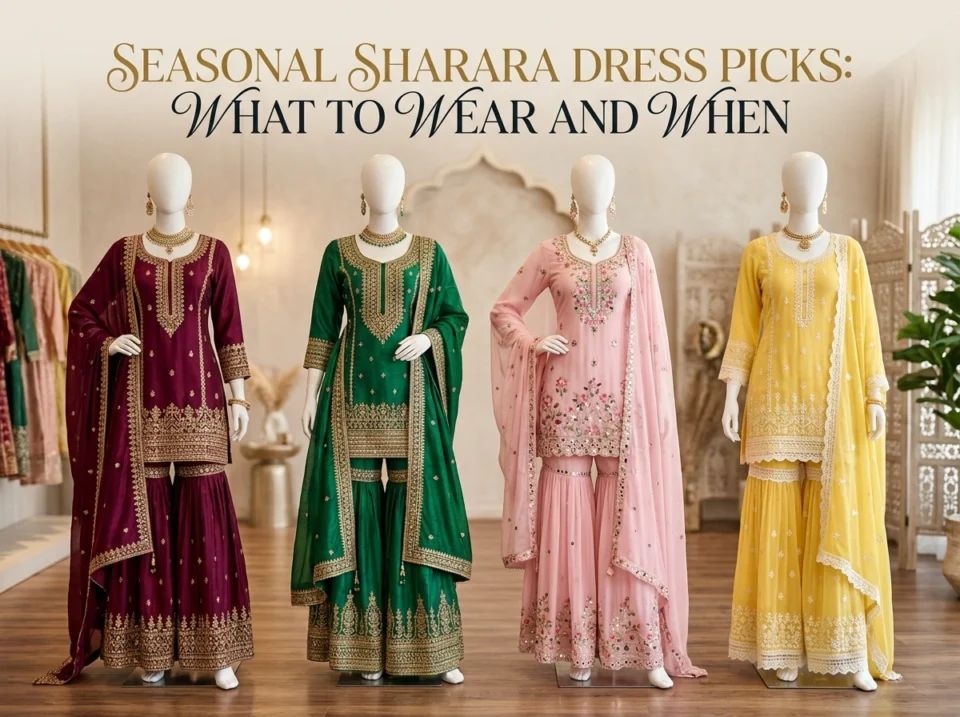
The sharara has moved from royal courts to modern wardrobes without losing an ounce of its drama. Those wide, flowing trousers paired with a short kurti and a graceful dupatta still turn heads at weddings, festivals, and dinner parties alike. But the secret to wearing one well goes beyond the design itself. It comes down to choosing the right fabric, color, and silhouette for the season you’re dressing for.
This guide walks you through how to style a sharara across spring, summer, autumn, and winter. You’ll learn which fabrics breathe in the heat, which weaves keep you warm in the cold, and which occasions call for which look. By the end, you’ll know exactly what to wear and when.
A Quick Look at the Sharara’s Heritage
Before we get into seasonal picks, it helps to understand where this silhouette comes from. The sharara traces its roots to Mughal-era royalty, when women of the court wore flared, flowing trousers cut from rich brocades and silks. Each piece signaled status, craftsmanship, and ceremony.
Today’s versions keep that regal flare but adapt it for real life. Lighter fabrics, refined embroidery, and smarter cuts mean you can wear a sharara to a daytime brunch or a grand reception with equal ease. That flexibility is exactly why the silhouette suits every season so well.
Takeaway: The sharara is built on heritage but designed for modern movement, which makes it endlessly adaptable.
Spring Sharara Picks: Soft, Fresh, and Light
Spring calls for an easy elegance. The weather is mild, the mood is bright, and your outfit should feel just as airy.
Best Fabrics for Spring
Reach for georgette, soft chiffon, and lightweight cotton-silk blends. These fabrics drape beautifully and let air move freely, so you stay comfortable as temperatures rise. They also hold pastel dye well, which matters for the season’s palette.
Color Palette
Think blossom tones: blush pink, mint green, lavender, butter yellow, and powder blue. These shades echo the season’s flowers and photograph gorgeously in natural daylight.
Occasions to Try It
- Daytime functions: A pastel sharara with light thread embroidery suits engagement lunches and Eid morning gatherings.
- Casual celebrations: Pair a printed kurti with a solid flared bottom for a relaxed yet polished look.
- Mehndi events: Floral motifs and gota work feel right at home during spring pre-wedding functions.
Takeaway: Keep spring sharara looks light in both fabric and color to match the season’s gentle energy.
Summer Sharara Picks: Breathable and Breezy
Summer styling is all about staying cool while still looking put together. The right fabric does most of the heavy lifting here.
Best Fabrics for Summer
Choose pure cotton, mulmul, organza, and fine net. These let your skin breathe during hot afternoons and humid evenings. Avoid heavy velvets or thick brocades, which trap heat and weigh you down.
Color Palette
Stick to whites, ivories, soft corals, sky blues, and citrus shades like lime and tangerine. Lighter colors reflect sunlight and keep you feeling fresher through long events.
Occasions to Try It
- Daytime parties: A breezy organza sharara with minimal embellishment works for brunches and garden gatherings.
- Festive evenings: Add a sequined dupatta to a cotton base for an outfit that feels celebratory without overheating.
- Casual outings: A solid-color cotton sharara with a simple kurti makes an easy, elegant everyday choice.
Tip: Carry a lightweight dupatta you can drape over your shoulders or arm rather than wrapping it fully. It keeps the look styled without adding warmth.
Takeaway: Summer sharara dressing thrives on natural fabrics and pale, light-reflecting colors.
Autumn Sharara Picks: Rich Tones and Layered Texture
As the air cools, your wardrobe can welcome deeper colors and more substantial fabrics. Autumn is the season for warmth in both tone and texture.
Best Fabrics for Autumn
Try art silk, raw silk, and lightly embroidered crepe. These offer more structure than summer weaves while still feeling comfortable. They also carry rich embellishment beautifully.
Color Palette
Lean into earthy, jewel-inspired shades: rust, mustard, deep teal, burgundy, and forest green. These tones suit the season’s golden light and pair well with gold or antique embroidery.
Occasions to Try It
- Festive gatherings: Diwali and Karva Chauth call for a richly embroidered sharara in a warm jewel tone.
- Evening parties: A raw silk set with mirror or zardozi detailing adds the right amount of shine.
- Family functions: Mid-weight crepe sharara dresses balance comfort and elegance for long celebrations.
Takeaway: Autumn is the time to embrace deeper colors and slightly heavier fabrics with statement embroidery.
Winter Sharara Picks: Luxe Fabrics and Bold Drama
Winter is where the sharara truly returns to its royal roots. Cooler weather lets you wear the richest fabrics and most elaborate designs without discomfort.
Best Fabrics for Winter
Velvet, heavy silk, banarasi brocade, and jamawar come into their own now. They hold warmth, carry intricate work, and create that grand, structured flare the silhouette is known for. This is also the ideal season for a bridal sharara dress, since heavier fabrics suit elaborate ceremonies and long photo sessions.
Color Palette
Go bold and regal: deep red, royal blue, emerald, plum, and classic gold. These shades feel festive and pair naturally with heavy embellishment.
Occasions to Try It
- Weddings: A velvet or banarasi bridal sharara with detailed embroidery makes a stunning statement.
- Receptions and sangeets: Heavy silk sets with sequin and stone work shine under evening lighting.
- Festive parties: A brocade sharara with a contrast dupatta delivers instant drama.
Takeaway: Winter invites the most opulent fabrics and richest colors, making it the prime season for bridal and grand occasion wear.
Year-Round Styling Tips for the Modern Woman
No matter the season, a few styling principles help your sharara look its best.
Balance Your Proportions
The sharara’s volume sits at the legs, so keep the kurti fitted and shorter to balance the silhouette. A cropped or knee-length top lets the flare do the talking.
Choose Footwear That Disappears
Wedges and block heels work well because they add height without peeking out from under the wide hem. Match the metallic tone of your shoes to your jewelry for a pulled-together finish.
Layer Jewelry by Occasion
- Daytime: Keep it minimal with studs and a thin bangle stack.
- Festive: Add jhumkas and a statement ring.
- Bridal: Go full glamour with a maang tikka, layered necklaces, and matching kadas.
Style the Dupatta Intentionally
How you drape your dupatta changes the entire look. A single-shoulder drape feels modern, while a full head-to-shoulder style reads traditional. Pick one that suits the formality of your event.
Match Embellishment to Setting
Save heavy zardozi and mirror work for evening and indoor events. For daytime and outdoor functions, lighter thread work and gota detailing photograph better and feel less overwhelming.
Takeaway: Smart proportions, intentional accessories, and occasion-matched embellishment turn any sharara into a complete look.
Bringing It All Together
The beauty of the sharara lies in its range. The same heritage silhouette can feel light and fresh in spring cotton, cool and breezy in summer organza, rich and warm in autumn silk, or grand and regal in winter velvet. Once you learn to read the season and the occasion, choosing the right piece becomes effortless.
Start by identifying your event and the weather, then work backward to the fabric and color. A pastel georgette set for a spring mehndi, a jewel-toned crepe for a Diwali dinner, a velvet showstopper for a winter wedding: each choice honors both the season and the centuries of craftsmanship behind the style.
Next step: Look at your upcoming calendar, match each occasion to its season, and build your sharara picks around the fabric and palette guidance above. You’ll always know exactly what to wear and when.
