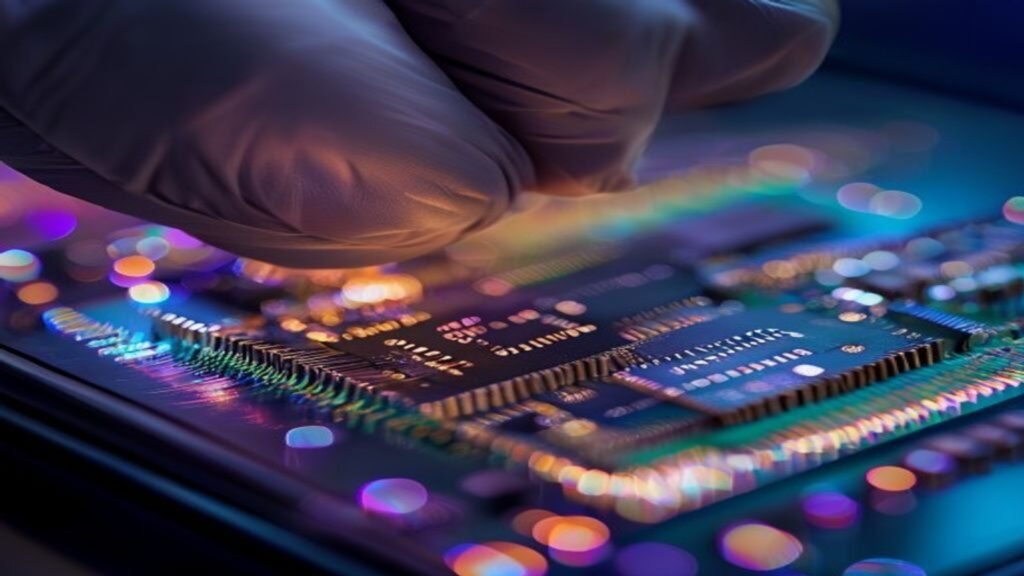
In the scrublands north of Phoenix and the cornfields outside Columbus, the most expensive construction projects in American history are taking shape: semiconductor fabrication plants that cost more than aircraft carriers and demand cleanliness standards a thousand times stricter than a hospital operating room. They are the visible face of a national campaign to reverse a forty-year slide — to bring advanced chipmaking, the foundation technology of the modern economy, back to American soil.
How America Lost the Leading Edge
The United States invented the integrated circuit and dominated its manufacture for decades, but by the early 2020s its share of global chip fabrication had fallen dramatically, and the most advanced logic chips were produced almost exclusively in East Asia. The concentration was an accident of business-model history: American firms pioneered the fabless model, keeping design onshore while outsourcing fabrication. The arrangement worked brilliantly until the pandemic exposed its fragility — car plants idled for want of basic chips — and geopolitical tension turned an economic vulnerability into a strategic one.
The Bet of the Decade
Washington’s answer was the largest industrial policy intervention since the space race: tens of billions in direct fabrication incentives plus investment tax credits, matched several times over by private capital. The headline projects are advanced-logic fabs from the world’s leading manufacturers, but the strategy runs deeper — new capacity for memory, mature-node chips that feed cars and appliances, advanced packaging plants that assemble finished processors, and expanded production of the exotic materials and gases fabs consume. The goal is not self-sufficiency, which experts consider fantasy, but resilience: no single point of failure an ocean away.
Silicon Meets Reality
Building fabs in America proved harder than funding them. Early flagship projects slipped years behind schedule as companies wrestled with permitting, construction labor shortages, and the discovery that a fab’s ten thousand tools each demand installation expertise concentrated in Asia. Veteran engineers had to be flown in to train American crews; community colleges spun up cleanroom technician programs from scratch. The learning curve was expensive — and it worked. Advanced chips are now shipping from American soil in volume, with yields that skeptics predicted were impossible outside the industry’s home turf.
The AI Accelerant
The artificial intelligence boom transformed the initiative’s economics mid-flight. Explosive demand for AI processors and high-bandwidth memory turned capacity that once looked speculative into some of the most valuable real estate in the global economy. Data-center construction has soaked up every available advanced chip, and manufacturers who hedged their American expansion plans have accelerated them instead. Analysts note the strategic irony: the technology wave Washington hoped to prepare for arrived before the concrete cured, validating the bet faster than its architects dared predict.
The Long Game
Sober voices caution what remains undone. American fabs still depend on foreign lithography machines, chemicals, and substrates; costs run higher than in Asia; and the talent pipeline needs a decade of sustained investment. Subsequent funding fights will test whether industrial policy can survive changes of political weather. But something fundamental has already shifted: chip manufacturing is again a career an American engineering student can pursue at home, in Ohio or Arizona or upstate New York. The renaissance is not complete. It is, however, unmistakably real — measured in silicon, shipped monthly, made in America.