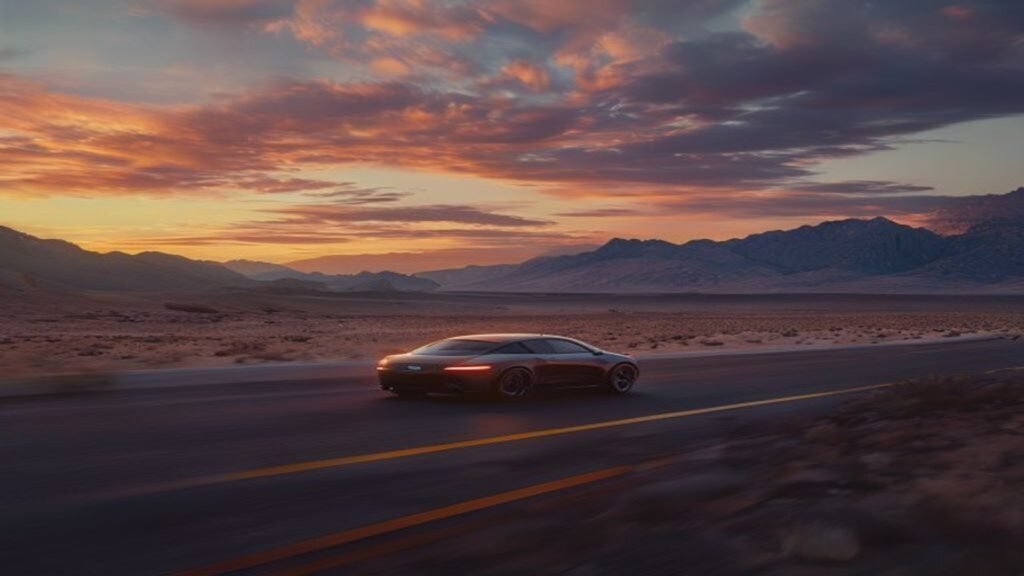
The road trip is America’s founding vacation myth — Route 66 postcards, station wagons, the open horizon as birthright. Every generation reinvents it, and the current reinvention may be the most interesting yet: electrified, unhurried, and pointed deliberately away from the interstate. The great American drive is thriving, but it no longer looks like making good time. It looks like taking it.
The Electric Itinerary
The fear that electric vehicles would kill the road trip inverted into its opposite: EV owners report planning better trips. Fast-charging networks now blanket the major corridors, and the twenty-five-minute charge stop — initially resented — has been absorbed into trip culture as enforced pause: coffee, a walk, an actual conversation. Charging apps double as discovery engines, since stations increasingly anchor themselves beside diners, farm stands, and town squares competing for dwell time. Small businesses learned the arithmetic quickly: a charging EV is a customer with twenty guaranteed minutes and nowhere else to be.
The Two-Lane Renaissance
The deeper change is philosophical. Surveys of younger travelers show declining interest in covering maximal miles and rising interest in the texture between destinations — the courthouse squares, roadside attractions, and regional food that interstates were engineered to bypass. State tourism offices, sensing the shift, have poured investment into scenic byway programs, refurbished motor courts, and small-town main streets. The neon motel, nearly extinct twenty years ago, has become a design-magazine darling, restored by young owners selling precisely what the highway chains cannot: place, story, and a pool shaped like a kidney.
Small Towns Cash In — Carefully
For rural communities, the slow-travel wave is economic development that arrives by car. Towns along celebrated routes report record visitation, and the multiplier is local by nature — travelers eating at the family diner and sleeping at the independent motel rather than the exit-ramp franchise cluster. The challenge, town managers admit, is scale: the same forces that made destinations of certain mountain and desert towns brought traffic, housing pressure, and the delicate question of how much charm survives its own discovery. The emerging playbook favors dispersal — marketing the county, not the crossroads — and shoulder-season events that spread the load.
The Gear and the Company
The reinvented road trip travels with new equipment: rooftop tents and camper vans normalized by the vanlife years, dogs in a striking share of back seats, and remote work extending trips from weekends to weeks. Multigenerational travel has surged, with grandparents, parents, and children splitting the drive and the memories. What has not changed is the trip’s essential architecture — the playlist arguments, the billboard mysteries, the gas-station-now-charging-station snacks — the ritual of a country big enough to feel discovered from the driver’s seat.
Why It Endures
Travel forecasters keep predicting the road trip’s obsolescence — to cheap flights, to virtual everything — and the road keeps winning. The explanation may be control: in an era of canceled flights and algorithmic itineraries, the car remains the last vehicle of pure autonomy, departing when you decide and detouring because a hand-painted sign promised the world’s largest ball of twine. The great American road trip has survived a century of reinvention by protecting its only essential promise. The horizon is still open. The next town is still a surprise. And the way there still belongs entirely to you.