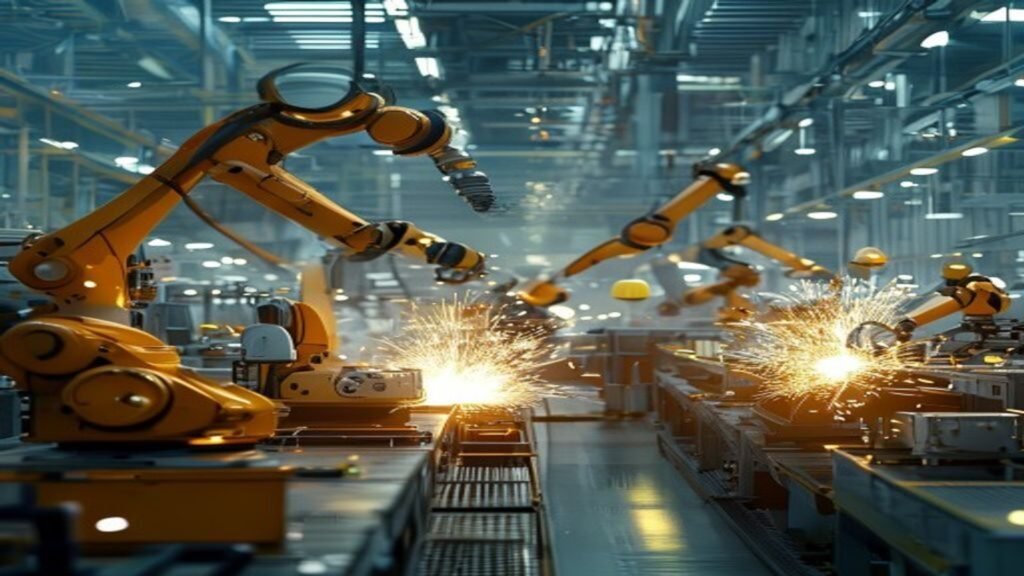
For half a century, the story of American manufacturing was written in past tense: shuttered plants, hollowed-out towns, and the long migration of production to cheaper shores. That narrative is being revised in real time. A combination of federal industrial policy, supply-chain trauma, and rising geopolitical risk has triggered the largest wave of factory construction in modern American history — and much of it is landing in the very regions the old economy left behind.
The Construction Super-Cycle
Spending on manufacturing construction has shattered records for several consecutive years, running at multiples of its pre-pandemic pace. The signature projects are semiconductor fabs in Arizona, Ohio, and Texas, battery plants across a corridor stretching from Michigan to Georgia, and a quieter boom in pharmaceutical and medical-device production. Site-selection consultants describe a scramble for what they call megasites — thousand-acre parcels with heavy power, water, and rail access — that has states competing to assemble and certify land years before a tenant appears.
Why Companies Are Coming Back
Executives cite a consistent list of motives. The pandemic exposed the fragility of ocean-spanning supply chains; a single stuck container ship became a boardroom parable. Geopolitical tension turned concentration risk into a line item that chief financial officers could no longer ignore. Federal incentives for chips, clean energy, and critical materials changed the math on domestic production. And automation quietly rewrote the labor equation: when robots handle much of the repetitive work, the wage gap with overseas plants matters less than proximity to customers and engineers.
The Rust Belt’s Second Act
The Midwest is capturing an outsized share of the boom, and not by accident. The region offers what the new factories need most: industrial water systems, high-capacity power grids, freight rail, and communities with deep manufacturing memory. In towns outside Columbus, Kokomo, and Grand Rapids, industrial parks that sat half-empty for decades are filling with suppliers clustering around anchor plants. Local officials describe a psychological shift as much as an economic one — high school robotics teams now tour fabs, and the phrase factory job has recovered its old dignity, this time with climate-controlled clean rooms.
The Ten-Thousand-Worker Question
The boom’s binding constraint is people. Manufacturers report tens of thousands of open roles for technicians, maintenance specialists, and process engineers, and the pipeline is thin after decades of steering students away from the trades. The response has been a burst of workforce experimentation: registered apprenticeships co-designed with community colleges, signing bonuses for certified technicians, and partnerships that place instructors from industry directly into classrooms. Some companies are building training centers before their factories are finished, betting that the workforce, not the machinery, is the real long-lead item.
A Boom With Homework
Economists caution that reshoring is not a time machine; the new plants will never employ workers in the numbers the old mills did, and some announced projects will slip or shrink with market cycles. Housing shortages and grid capacity loom as local bottlenecks. But the direction is unmistakable. America is building again — at a scale that is changing skylines, school curriculums, and the electoral map of the industrial heartland. The Rust Belt spent forty years as a cautionary tale. It is spending this decade as a construction site, and that may be the most hopeful plot twist in American economic life.