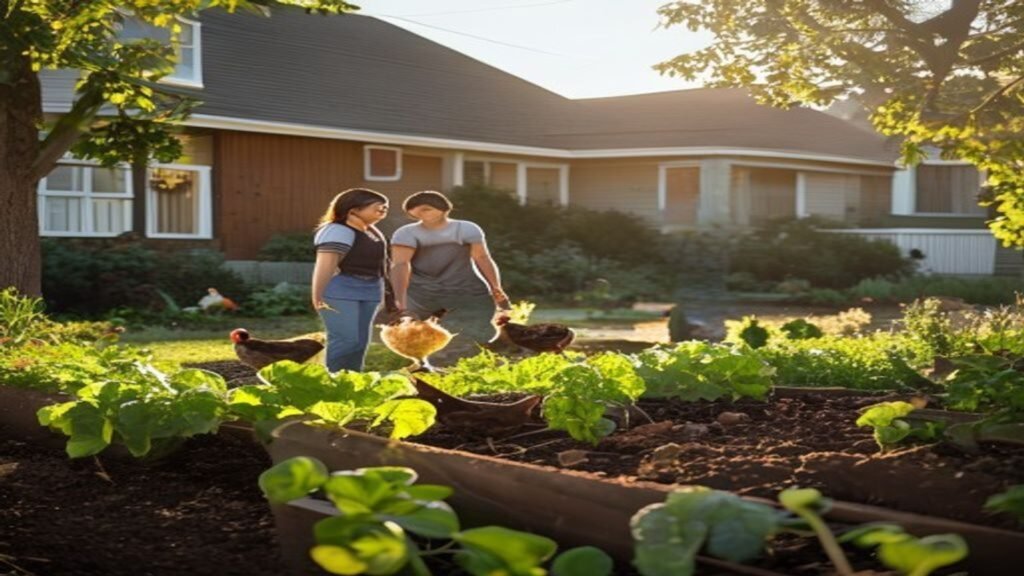
The homestead was supposed to be a relic — a word for museum villages and pioneer novels. Instead it became one of the defining aspirations of a generation raised on screens. Across America, in farmhouses and, more often, in ordinary suburban yards, millions of mostly younger households are canning tomatoes, keeping chickens, baking bread, and learning skills their great-grandparents considered unremarkable. The new homesteading is less a retreat from modern life than a negotiation with it — and its scale has quietly become an economic and cultural force.
From Sourdough to System
The pandemic’s sourdough craze was dismissed as boredom baking, but longitudinal surveys tell a different story: the habits persisted and expanded. Vegetable gardening participation reached modern highs, seed companies report sustained demand years past the lockdown spike, and backyard chicken ownership — turbocharged by egg-price shocks — has moved from novelty to normal in thousands of municipalities that rewrote ordinances to permit it. The pattern, researchers note, is a ladder: bread leads to gardens, gardens to preservation, preservation to the full quarter-acre ecosystem of compost, coops, and chest freezers.
Why Now
The motivations braid the practical and the philosophical. Food inflation made the productive yard financially legible. Supply-chain shocks planted durable doubts about systems that once felt invisible. But the deeper driver, sociologists argue, is a hunger for tangible competence among generations whose work and leisure both dissolved into screens — the specific satisfaction of a shelf of home-canned peaches or a loaf that rose properly, outcomes that cannot be faked, streamed, or outsourced. Mental-health researchers add supporting evidence: gardening and hands-on craft consistently correlate with reduced anxiety and the flow states that knowledge work rarely provides.
The Digital Paradox
The movement’s engine is, ironically, the internet it partially rejects. Homestead influencers command audiences in the millions, YouTube functions as the world’s largest agricultural extension service, and no fermentation question survives ten minutes unanswered online. Critics note the aesthetic economy — golden-hour chicken coops sell an ease the lifestyle does not deliver — and veterans warn newcomers that the photogenic harvest sits atop unphotogenic weeding. But educators defend the pipeline: romanticism recruits, reality trains, and the extension offices report record enrollment in food-preservation courses from students who arrived via an algorithm.
The Suburban Compromise
The revealing statistic is where the movement lives: overwhelmingly not on forty rural acres but on suburban lots and urban balconies. The modal new homesteader keeps a garden, three hens, and a full-time job with health insurance — self-sufficiency as portfolio rather than absolutism. Towns have adapted with community gardens, tool libraries, and farmers-market vendor slots for backyard surplus. Economists describe it as household production returning to the ledger after a century of outsourcing — small in GDP terms, meaningful in resilience, and measurable in the exploding market for canning jars, seed catalogs, and compact greenhouses.
What It Says About the Country
Every American generation has its back-to-the-land moment, from Thoreau to the 1970s communes, and each reflected its era’s anxieties. This one is telling: not withdrawal but hedging — a generation building small systems it can touch inside large systems it cannot control. The chickens are real, the bread is good, and the deeper crop is the one homesteaders name unprompted: the feeling, rare and getting rarer, of being competent at the physical business of being alive.