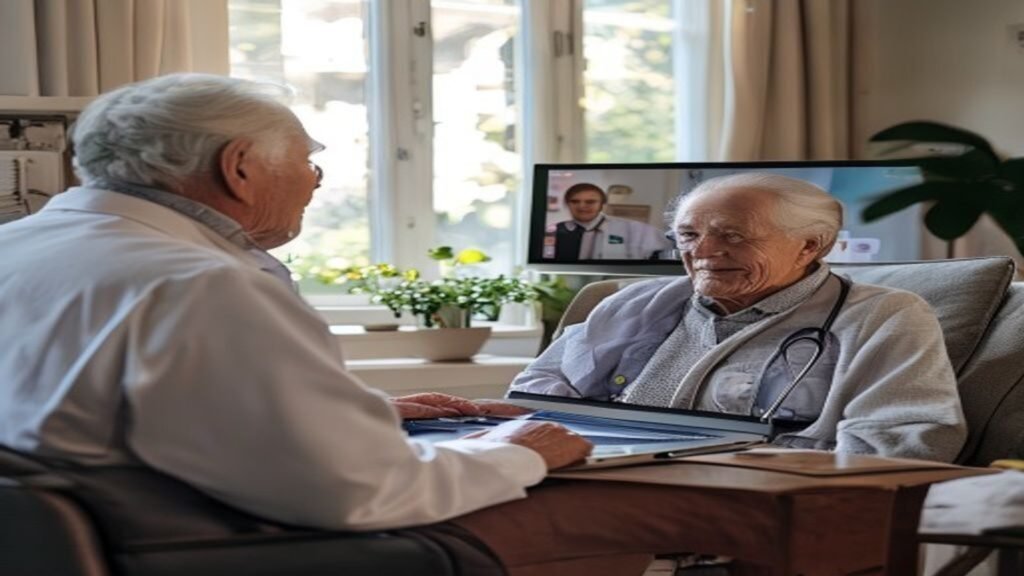
When the pandemic forced American medicine onto video calls, most observers assumed the arrangement was temporary — a stopgap until waiting rooms reopened. The waiting rooms reopened. The video calls stayed. Telehealth has settled into a durable place in American care, accounting for a substantial share of mental health visits and routine follow-ups, and evolving into something more sophisticated than the webcam appointments of the emergency years: a hybrid system where care flows to whichever channel serves the patient best.
Where Virtual Care Won Decisively
Behavioral health is telehealth’s unambiguous success story. A majority of therapy and psychiatric medication visits in many systems now happen virtually, and clinicians report attendance improvements that transform treatment: no-show rates fall dramatically when a session requires a laptop rather than a lunch-hour commute. Routine chronic-disease management follows close behind — blood-pressure checks, diabetes reviews, and prescription adjustments that never truly required a physical exam. For rural Americans, the arithmetic is starker: a specialist consult that once meant a half-day drive now fits between farm chores.
The Hybrid Settlement
The mature model is neither all-virtual nor all-office; it is triage. Health systems route new complaints and hands-on needs to exam rooms while shifting follow-ups, results reviews, and medication management online. Primary-care practices increasingly offer same-day virtual slots that absorb the urgent-but-minor cases that once flooded urgent care. Patients have proven discerning: surveys show strong preference for video in mental health and convenience visits, and equally strong preference for in-person care in complex or serious situations. The system, unusually, is organizing itself around what patients actually want.
The Home Becomes a Clinic
The frontier is remote monitoring. Connected blood-pressure cuffs, glucose monitors, scales, and cardiac patches now stream readings to care teams between visits, with algorithms flagging the patients who need a call today. Hospital-at-home programs — acute care delivered in bedrooms with nurse visits and continuous monitoring — have expanded from experiment to established option in major systems, with studies showing outcomes comparable to inpatient wards and satisfaction scores that embarrass them. Medicine spent a century centralizing into buildings; the infrastructure is now flowing back toward the patient.
The Problems Worth Naming
Telehealth’s maturity includes honest accounting of its limits. The digital divide remains medical: broadband gaps, device access, and technological comfort track the same populations who already face care disparities, which is why community health centers now run telehealth navigation programs and keep audio-only options alive. Regulatory patchwork persists — interstate licensing compacts have improved but not solved the absurdity of care that stops at state lines. And clinicians warn against convenience creep: some conditions genuinely require hands, and a system optimized for efficiency must guard the thoroughness that catches what video cannot show.
The Quiet Revolution
The most telling evidence of telehealth’s arrival is how unremarkable it has become. Patients book video follow-ups the way they book haircuts; physicians toggle between exam rooms and virtual queues; insurers, after years of hesitation, largely reimburse virtual care as care. American medicine, an industry famous for resisting change, absorbed its largest delivery transformation in a century almost without ceremony. The doctor will see you now — and increasingly, the question of where has simply stopped mattering.