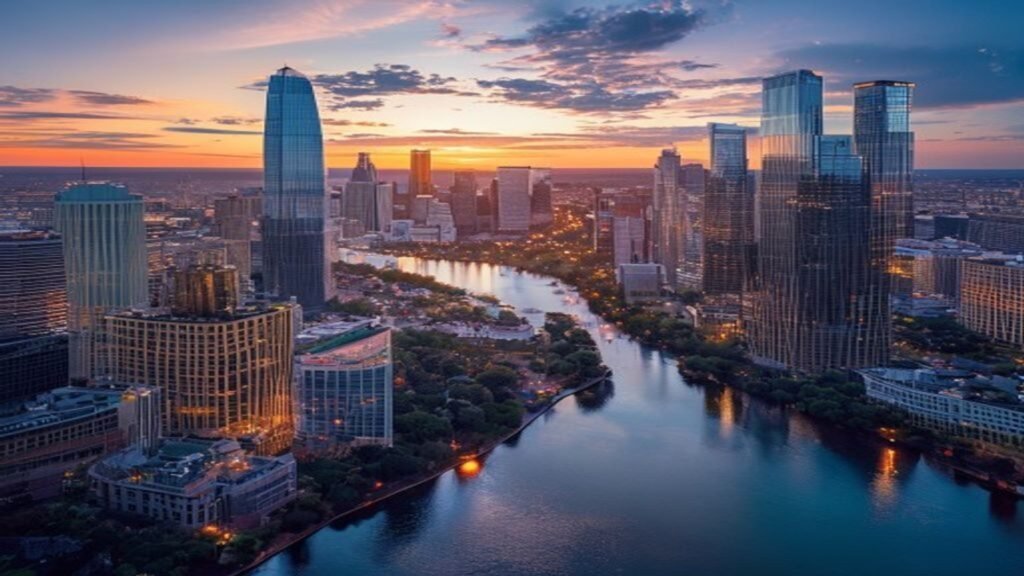
For most of the venture capital industry’s history, the map was simple: Silicon Valley first, a distant cluster in New York and Boston second, and everywhere else fighting for scraps. That map has been redrawn. While the Bay Area remains the largest single pool of startup capital — and reclaimed momentum in the AI boom — the past several years have cemented a structural shift: a meaningfully larger share of American venture dollars now flows to companies headquartered between the coasts, and the Sun Belt has emerged as the biggest winner.
The Pandemic Started It. Economics Sustained It.
Remote work broke the assumption that ambitious companies must cluster within an hour of Sand Hill Road, but what kept founders in Austin, Miami, and Nashville was arithmetic. Office space at a fraction of Bay Area rents. Engineering salaries that stretch further. No state income tax in Texas, Florida, and Tennessee. For a seed-stage company burning investor cash, headquarters geography became a runway decision: the same round buys months of additional life in the Sun Belt, and boards noticed.
Three Cities, Three Playbooks
The winners are not interchangeable. Austin built on a genuine technical base — semiconductor history, a flagship engineering university, and the gravitational pull of major corporate relocations — making it the most Silicon Valley-like of the three. Miami leaned into finance and Latin American connectivity, becoming the natural home for fintech and cross-border commerce startups, with a mayor who famously recruited founders one tweet at a time. Nashville took the specialist route: health care. With a deep bench of hospital operators and payers headquartered in the region, health-tech founders found customers, talent, and acquirers within a few square miles.
The Capital Followed the Founders
Venture firms initially serviced the migration with flights and Zoom. Then they opened offices. Major coastal funds now staff permanent teams in the new hubs, and homegrown firms have raised substantial local funds of their own. Just as important is the rise of regional angel networks seeded by earlier exits — founders who sold companies and recycled their winnings into the next generation. Economists call this the flywheel moment: when a startup ecosystem begins funding itself, it stops being a satellite and becomes a center.
Growing Pains Are Real
Success has imported familiar problems. Austin’s housing costs have climbed far faster than the national average, eroding part of its affordability pitch. Miami wrestles with insurance costs and climate exposure that give some institutional investors pause. Nashville’s infrastructure strains under growth the city planned for over decades, not years. And all three still lag the Bay Area in one stubborn resource: the density of experienced operators who have scaled companies from fifty employees to five thousand. Recruiters say senior executive searches still often end with a coastal relocation package.
What It Means for American Innovation
The dispersion of venture capital is best understood not as Silicon Valley’s decline but as America’s bench getting deeper. More cities can now credibly support a company from incorporation to IPO, which means more founders build where their industries, families, and customers already are. A health-tech startup in Nashville sits closer to its buyers than it ever would in Palo Alto; a logistics startup in Dallas watches its market drive past the office window. The next great American company can now come from more places than ever — and increasingly, it does.