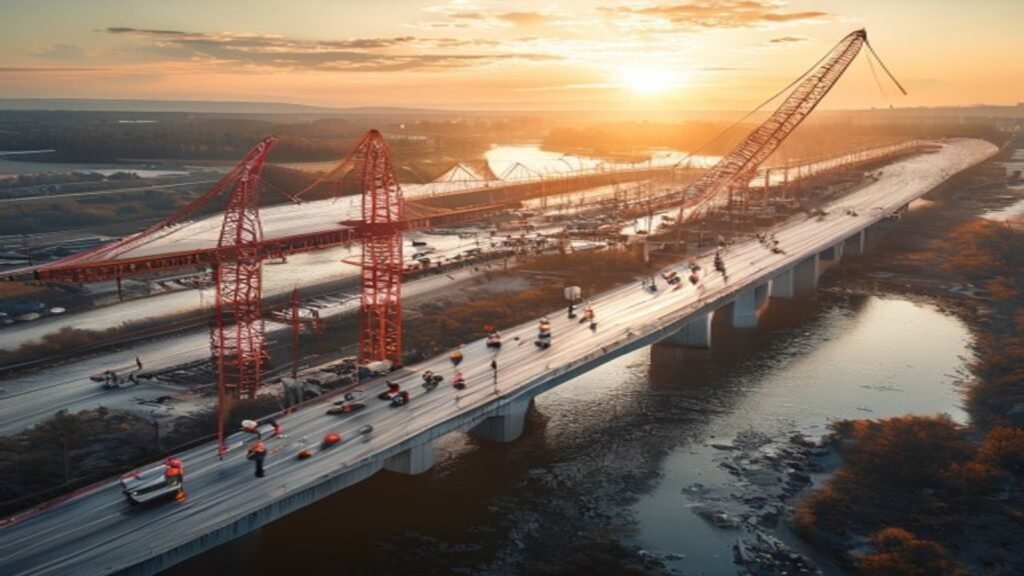
Drive through almost any county seat in the American heartland this summer and you will see the same scenery: orange cones, road crews, and construction signs bearing the small print of federal funding programs. Years after Washington approved its generational wave of infrastructure spending, the money has finally worked its way through state capitals and into the places least accustomed to federal attention — towns of five, ten, and twenty thousand people where a single bridge replacement can be the biggest public works project in a generation.
The Broadband Breakthrough
No single investment has changed daily life in rural America faster than broadband. Counties that spent two decades on the wrong side of the digital divide are now watching fiber crews string cable along farm roads. Local school districts report that homework no longer requires a drive to the library parking lot, and small hospitals are expanding telehealth services that were impossible on satellite connections. Economic developers say reliable internet has become the first question on every site-selection checklist — ahead of tax incentives — and towns that can finally answer yes are landing employers they never could have courted before.
Bridges, Water, and the Backlog Nobody Saw
The less glamorous work may matter even more. Civil engineers have warned for years about the country’s inventory of structurally deficient bridges, many of them short rural spans that carry school buses and grain trucks. Thousands of those bridges are now being repaired or replaced, often through programs that let counties apply directly for federal help rather than competing with big-city projects. Water systems are getting the same treatment: lead service lines are coming out of the ground in older factory towns, and small utilities are replacing century-old mains that leaked as much water as they delivered.
A Jobs Pipeline With a Catch
All that construction has collided with a tight labor market. Contractors in rural areas report waiting lists for certified welders, heavy-equipment operators, and electricians, and community colleges have responded with fast-track credential programs, many funded by the same federal legislation. The catch is timing: projects are being sequenced around workforce availability, and some grants risk expiring before crews can be hired. Local officials have become unlikely lobbyists for apprenticeship funding, arguing that the infrastructure decade will stall without a trades revival to match it.
The Political Ripple Effect
The spending is also scrambling old political scripts. Local officials of both parties show up at ribbon cuttings, and voters largely judge the projects on results rather than on the party that passed them. County commissioners say constituents care about whether the water tastes clean and the detour ends on schedule. Political scientists studying the phenomenon note a modest but measurable effect: in communities with visible projects, trust in local government has ticked upward even as national polarization deepens. Whether that goodwill transfers to Washington remains an open question.
What Comes Next
The pipeline of funded projects stretches into the early 2030s, which means the orange cones are not going away. The bigger question is maintenance: small towns that received new assets must now budget to sustain them, and many are creating their first long-term capital plans. For communities that spent decades watching investment flow elsewhere, that is a good problem to have. The infrastructure decade began as a Washington story. It is ending as a Main Street one — measured in bridges crossed, faucets trusted, and job postings filled, one small town at a time.