
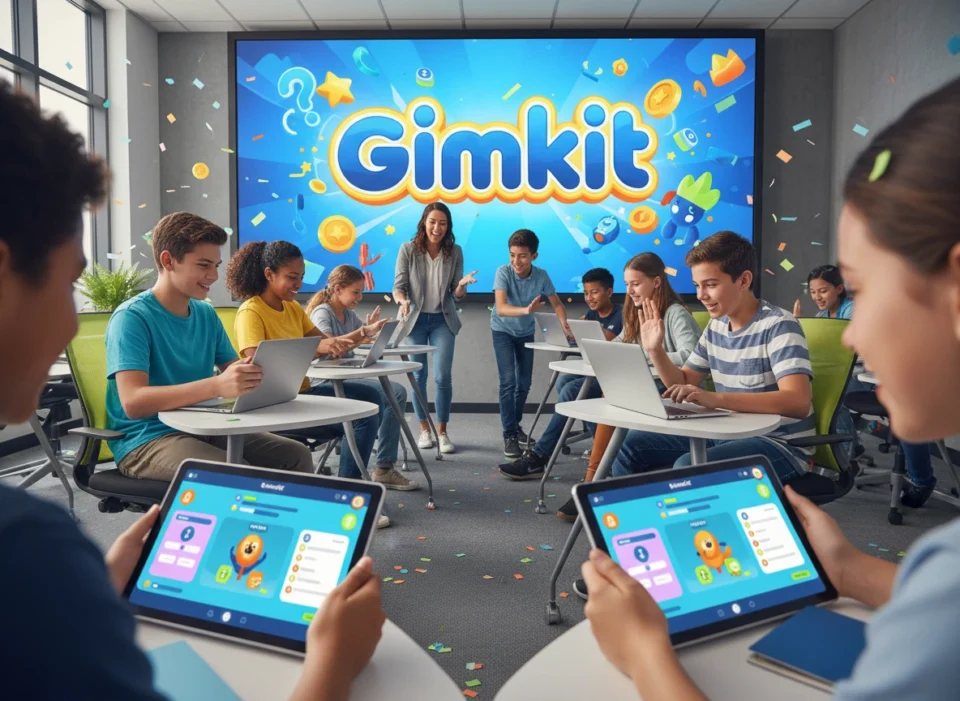
Walk into any modern classroom, and the atmosphere has shifted. Gone are the days of silent rows of desks and lectures that drone on for the entire period. Today’s learning environment is dynamic, interactive, and increasingly digital. Technology isn’t just an add-on; it is the infrastructure upon which modern pedagogy is built. Amidst a sea of educational apps and platforms, one tool has surged in popularity, capturing the attention of both educators and students alike: Gimkit.
This isn’t just another quiz app. It is a robust platform that merges high-stakes strategy with curriculum review, creating an environment where students beg to answer just one more question.
In this article, we will dissect what Gimkit is, explore the unique features that set it apart from competitors like Kahoot! or Quizizz, and examine why it is being hailed as a revolutionary force in educational engagement.
The Genesis of Gimkit: Built by Students, for Students
Most educational tools are built by corporate teams or former educators. Gimkit has a different origin story. It was created by a high school student, Josh Feinsilber, who was tired of the existing game-show classroom apps. He wanted something that felt less like a test and more like a game he would actually want to play.
This “student-first” DNA is evident in every pixel of the platform. Gimkit operates as a live learning game show where students answer questions on their own devices. However, unlike traditional quiz games where points are arbitrary, Gimkit introduces an in-game economy. Correct answers earn students “money,” which they can then reinvest to purchase upgrades and power-ups. This strategic layer transforms the experience from simple recall to complex decision-making.
Core Features That Define the Gimkit Experience
To understand why Gimkit is revolutionizing education, we have to look under the hood. The platform offers several distinct features that cater to diverse classroom needs.
The In-Game Economy
The defining feature of Gimkit is its virtual currency. When a student answers a question correctly, they earn money. If they answer incorrectly, they lose money. This simple mechanic introduces risk and reward. But the real magic happens in the “Shop.” Students can use their earnings to buy upgrades, such as:
- Streak Bonuses: Earn more money for consecutive correct answers.
- Multipliers: Increase the amount of money earned per question.
- Insurance: Protect against money loss from incorrect answers.
This economic layer teaches resource management and long-term strategy alongside the core subject matter.
Diverse Game Modes
Gimkit doesn’t rely on a single format. It offers a variety of game modes that keep the experience fresh:
- Classic Mode: Students compete individually to earn the most money.
- Team Mode: Students work together, pooling their resources to reach a collective goal.
- Trust No One: Inspired by the popular game Among Us, this mode introduces social deduction mechanics where students must identify the “impostors” while answering questions.
- The Floor is Lava: A cooperative mode where the class must keep building bridges to stay above rising lava.
KitCollab
One of the most powerful features for teacher workload reduction is KitCollab. Instead of the teacher writing all the questions, students submit their own questions to the game. This flips the script, turning students into content creators. When students have to formulate a question and the correct answer, they engage with the material at a deeper cognitive level.
Why Gimkit Stands Out: Beyond Simple Gamification
Gamification in education is often misunderstood. It isn’t just about adding badges or leaderboards to a worksheet. True gamification leverages game design elements to motivate behavior. Gimkit excels here because it taps into intrinsic motivation through autonomy and mastery.
Addressing Repetition Without Boredom
Repetition is essential for memory retention, but it is often boring. Gimkit solves this by making repetition the mechanic for earning currency. Students often answer the same questions multiple times within a single game session. Because they are focused on earning money to buy a power-up, they don’t view the repetition as tedious drill-work. They view it as “grinding” for resources—a concept familiar to anyone who plays video games.
Leveling the Playing Field
In traditional quiz games, the fastest student always wins. This can discourage students who need more processing time. Gimkit’s power-up system allows for different strategies. A student who answers slowly but invests wisely in multipliers can overtake a student who answers quickly but doesn’t upgrade their earnings. This dynamic ensures that speed isn’t the only path to victory, making the game accessible to a wider range of learners.
Impact on Student Engagement and Learning Outcomes
The effectiveness of any ed-tech tool must be measured by its impact on the learner. Reports from classrooms across the globe suggest that Gimkit is moving the needle significantly.
Increased Time on Task
Teachers consistently report that students ask to play Gimkit “just one more time.” This enthusiasm leads to increased time on task. When students are voluntarily spending 20 or 30 minutes answering questions about biology or history, the cumulative effect on learning is profound. The platform turns review sessions—often the most dreaded part of a unit—into the highlight of the week.
Promoting Soft Skills
Because many Gimkit modes require cooperation, students are inadvertently practicing essential soft skills. In team modes, they must communicate, strategize, and allocate resources efficiently. They learn to negotiate: “Should we save up for a team multiplier, or should we all buy insurance first?” These conversations are rich with critical thinking and collaboration.
Data-Driven Instruction for Teachers
While students see a game, teachers see data. Gimkit provides detailed reports after every session. Teachers can see which questions were missed most frequently, identifying specific gaps in understanding. If 80% of the class missed a question on quadratic equations, the teacher knows exactly what to re-teach the next day. This immediate feedback loop allows for agile, responsive teaching.
Real-World Application: Gimkit in the Classroom
How does this look in practice? The versatility of the platform means it fits into various instructional scenarios.
The Bell Ringer:
A history teacher uses a quick, 5-minute Gimkit session at the start of class to review concepts from the previous day. It wakes students up and gets their brains primed for learning.
The Review Day:
Before a major science test, a teacher sets up a 30-minute session. Students play in “Team Mode,” working together to reach a collective financial goal. The competitive atmosphere is high, but so is the camaraderie.
Homework Assignments:
Teachers can assign “Gimkit Ink” as homework. Students play through the assignment at their own pace until they reach a target cash amount. This removes the pressure of a timer and allows students to take their time engaging with the material at home.
The Future of Ed-Tech and Gimkit’s Role
As we look toward the future of education, tools like Gimkit represent a shift away from passive consumption toward active participation. The “revolution” here is the realization that engagement is a prerequisite for learning. You cannot teach a student who isn’t listening, and you cannot reach a student who is bored.
Gimkit is likely just the beginning of a wave of tools that will blur the line between gaming and schooling. We can expect to see deeper integrations with Learning Management Systems (LMS), more AI-driven question generation, and perhaps even VR capabilities in the future.
However, the core lesson from Gimkit’s success will remain: student agency matters. By giving students control over their strategy and making them active participants in the learning process, we unlock potential that traditional methods often leave dormant.
Conclusion
Gimkit is more than a flashy distraction; it is a sophisticated pedagogical tool wrapped in a fun package. By combining curriculum review with strategic gameplay, it addresses the age-old problem of student disengagement. It allows students to fail safely, learn from their mistakes, and strategize for success.
For educators looking to revitalize their classroom and connect with a generation of digital natives, Gimkit offers a compelling solution. It reminds us that learning can be hard work, but it doesn’t have to be drudgery. It can be exciting, competitive, and yes, even fun.
