
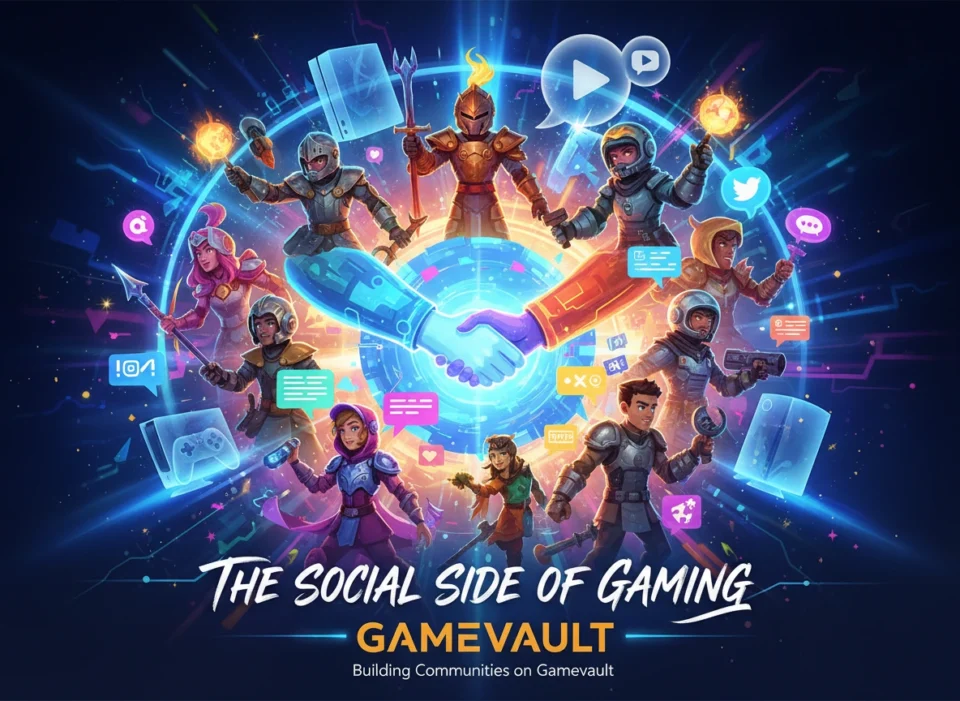
Video games have long shed their reputation as a solitary pastime. What once involved a single player facing a screen is now a vibrant, interconnected world where millions gather to compete, collaborate, and connect. The rise of online multiplayer gaming and dedicated platforms has transformed the landscape, placing community at the heart of the experience. This social evolution is not just changing how we play; it’s redefining the very essence of gaming. Platforms like Gamevault are at the forefront of this shift, providing the infrastructure for players to build lasting communities.
This article explores the profound social dimensions of modern gaming. We will examine how platforms foster these digital societies, the tangible benefits these communities offer to players, and their wider impact on mental well-being and the industry itself. From coordinated team strategies to casual conversations in a forum, the social side of gaming is richer and more complex than ever.
From High Scores to Shared Experiences
The journey from single-player dominance to a socially integrated ecosystem has been gradual but definitive. Early arcade and console games focused on individual achievement—beating a personal high score or completing a story. While “couch co-op” allowed friends to share a screen, the scale was limited to who could fit in the living room.
The internet changed everything. The introduction of online multiplayer capabilities turned games into global arenas. Suddenly, you weren’t just playing against the computer; you were testing your skills against real people from different cities, countries, and continents. This shift created a foundational need for communication and organization, paving the way for the community-centric platforms we see today.
Modern platforms are more than just matchmakers. They are comprehensive social hubs designed to support player interaction at every level. They recognize that the moments between matches—the strategy discussions, the shared celebrations, and the friendly banter—are just as important as the gameplay itself.
Building a Community: The Role of Platforms Like Gamevault
A thriving gaming community doesn’t just happen by chance. It requires a dedicated space with tools and features designed to bring people together. Platforms like Gamevault serve as the digital town square, offering a centralized environment where players can connect, share, and grow. Let’s explore the key features that make this possible.
Integrated Communication and Forums
Effective communication is the lifeblood of any community. Gamevault and similar platforms integrate various communication tools directly into the user experience. In-game voice and text chat are essential for real-time coordination during multiplayer matches, allowing teams to execute complex strategies and react instantly to changing circumstances.
Beyond the game itself, dedicated forums and discussion boards provide a space for asynchronous conversation. Here, players can:
- Discuss game strategy: Share tips, debate character builds, and analyze game mechanics.
- Organize groups and guilds: Recruit members for a clan or find like-minded players for a regular gaming session.
- Share content: Post screenshots of epic moments, share fan art, or link to gameplay videos.
- Provide feedback: Communicate directly with developers about bugs, balance issues, and feature requests.
These forums create a persistent social space that exists even when players aren’t actively in a game, strengthening the bonds within the community.
Multiplayer Lobbies and Matchmaking
The core of social gaming is, of course, playing together. Sophisticated matchmaking systems are crucial for a positive multiplayer experience. These systems aim to connect players of similar skill levels, ensuring that matches are competitive and fair. This prevents new players from being discouraged by constantly facing veterans and gives experienced players a consistent challenge.
Furthermore, custom lobbies and server browsers give players control over their experience. You can create private matches for friends, set specific rules for a game, or join servers dedicated to particular playstyles. This flexibility allows smaller sub-communities to form around shared interests, whether it’s a group dedicated to hyper-competitive play or a casual clan that meets on weekends.
Events, Tournaments, and Leaderboards
Organized events are a powerful tool for galvanizing a community. Platforms like Gamevault facilitate a wide range of competitive and social gatherings. Official developer-run tournaments with prizes can attract thousands of participants, creating an exciting, high-stakes atmosphere. At the same time, community-run events, from friendly competitions to themed gameplay nights, foster a sense of grassroots engagement.
Leaderboards add another layer of social competition, allowing players to see how they stack up against friends, rivals, and the global player base. The pursuit of a top rank can be a powerful motivator, encouraging skill improvement and driving engagement as players vie for bragging rights.
The Benefits of Gaming Communities
Joining a gaming community offers advantages that extend far beyond the game itself. These digital tribes provide social, psychological, and practical benefits that enrich players’ lives.
Combating Loneliness and Fostering Connection
For many, gaming communities are a vital source of social interaction. They provide a space to form genuine friendships with people who share a common passion, regardless of geographical distance. In a world where feelings of isolation are increasingly common, these online networks offer a sense of belonging and camaraderie.
Players often form deep bonds, celebrating victories and supporting each other through defeats. These relationships frequently transcend the game, with online friends becoming real-life confidants. The shared challenges and collaborative triumphs inherent in many games create a powerful foundation for strong social ties.
Skill Development and Collaborative Learning
Gaming communities are incredible environments for learning. In cooperative games, players must learn to communicate clearly, trust their teammates, and work together toward a common goal. This develops valuable soft skills like teamwork, leadership, and problem-solving.
In competitive games, the community serves as a massive knowledge base. Players constantly share new strategies, analyze professional matches, and create detailed guides. This collaborative learning environment accelerates skill development, helping individuals improve far more quickly than they could on their own. Mentorship is also common, with experienced players often taking newcomers under their wing.
A Positive Impact on the Gaming Industry
Engaged communities are a massive asset to game developers. A dedicated player base provides a constant stream of valuable feedback, helping to identify bugs, suggest quality-of-life improvements, and guide future development. This symbiotic relationship leads to better, more polished games that resonate with their audience.
Furthermore, a strong community is the best form of marketing. Passionate players become evangelists for their favorite games, creating content, streaming their gameplay, and introducing new players to the fold. This organic, word-of-mouth promotion is incredibly powerful and helps sustain a game’s population long after its initial release.
Conclusion: More Than Just a Game
The social side of gaming has transformed the medium into one of the most significant forms of social networking on the planet. Platforms like Gamevault are no longer just distributors of software; they are architects of communities. By providing robust tools for communication, competition, and collaboration, they empower players to connect in meaningful ways.
These communities offer a powerful antidote to loneliness, a fertile ground for skill development, and a direct line of communication that benefits both players and developers. They prove that the connections forged in virtual worlds can have a real and positive impact on our lives. As technology continues to evolve, the integration of social features will only deepen, further solidifying gaming’s place as a cornerstone of modern social life. The game is just the beginning; the community is where the experience truly comes alive.
