
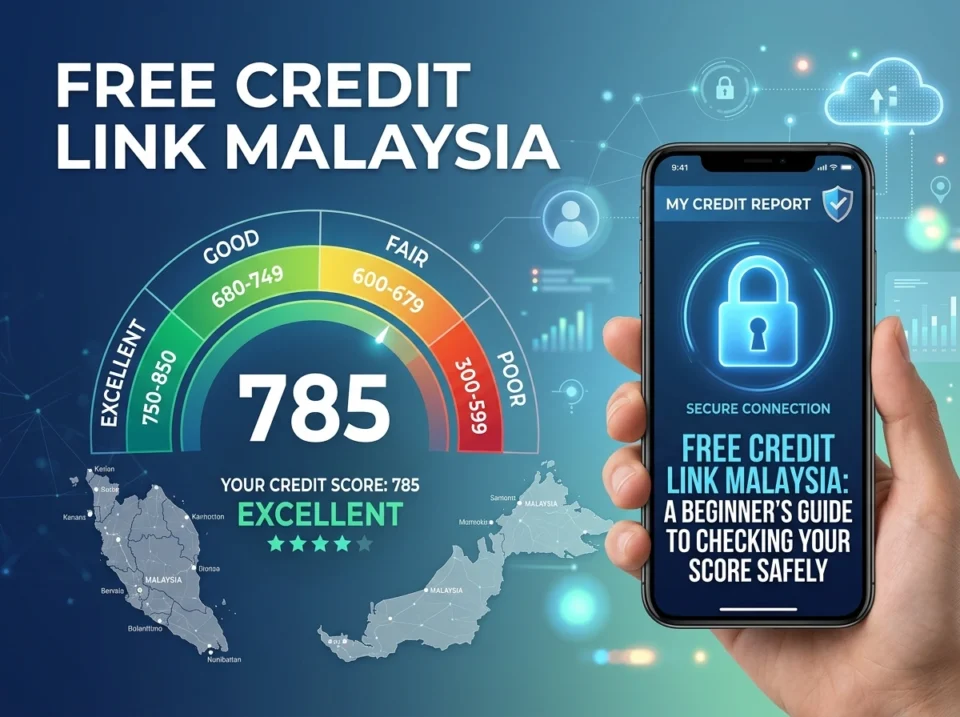
Your credit score quietly shapes many big decisions in your financial life. It can influence whether you get approved for a home loan, a car loan, or even a new credit card. Yet many Malaysians have never checked their score, often because they aren’t sure how to do it safely or where to begin.
If that sounds like you, you’re in the right place. This guide explains what a credit score is, why it matters, and how beginners can check it without putting their personal data at risk. By the end, you’ll know exactly what steps to take and which mistakes to avoid.
What Is a Credit Score?
A credit score is a number that reflects how reliably you manage borrowed money. Lenders use it to estimate how likely you are to repay a loan on time. The higher your score, the more confident a bank feels about lending to you.
In Malaysia, your credit information comes from a few key sources. The most well-known is CCRIS (Central Credit Reference Information System), managed by Bank Negara Malaysia. Private credit reporting agencies, such as CTOS and Experian, also compile reports and generate scores.
What Goes Into Your Score?
Several factors shape your credit score. Understanding them helps you see the bigger picture:
- Payment history: Do you pay your bills and loans on time?
- Outstanding debt: How much do you currently owe across all accounts?
- Credit usage: How much of your available credit are you using?
- Length of credit history: How long have you been borrowing and repaying?
- Recent applications: Have you applied for several new credit products lately?
Each factor tells lenders something about your habits. Together, they form the snapshot that becomes your score.
Why Your Credit Score Matters
Think of your credit score as a financial reputation. It follows you whenever you apply for loans or other forms of credit. A strong score opens doors, while a weak one can slow things down.
Here’s where your score can make a real difference:
- Loan approvals: Banks check it before approving home, car, or personal loans.
- Interest rates: A higher score may help you secure lower rates.
- Credit limits: Lenders may offer you more borrowing power.
- Rental and employment: Some landlords and employers review credit history.
Checking your score regularly helps you understand where you stand. It also gives you time to fix problems before they affect a major application.
How Beginners Should Approach Score Checks
The first time you check your score can feel intimidating. Don’t worry—it’s simpler than it looks. The key is to start slow and use trustworthy sources.
Start With Official and Reputable Sources
Always begin with the official agencies. Bank Negara Malaysia provides access to your CCRIS report, and licensed agencies like CTOS offer detailed credit reports and scores. These are the most reliable places to find accurate information.
You can also explore a trusted free credit link to learn how to access your score conveniently. Just make sure any platform you use is transparent about how it handles your data.
Understand the Difference Between a Report and a Score
Beginners often confuse these two terms. A credit report is a detailed record of your borrowing history. A credit score is the single number summarizing that history. Reviewing both gives you the clearest understanding of your financial profile.
Read Your Report Carefully
When you receive your report, take your time. Look for:
- Loans and credit cards listed under your name
- Payment records and any late payments
- Total outstanding balances
- Any accounts you don’t recognize
Spotting errors or unfamiliar accounts early can protect you from bigger problems later.
Privacy and Security Best Practices
Checking your credit score means sharing sensitive personal details. That’s why security should always come first. A few simple habits can keep your information safe.
Verify the Platform Before You Share Data
Before entering your IC number or personal details, confirm the platform is legitimate. Stick to official agencies or licensed credit reporting companies. If a website looks unprofessional or makes unrealistic promises, leave immediately.
Look for Secure Connections
Always check that the website uses a secure connection. The address should begin with “https,” and you should see a padlock icon in your browser. This signals that your data is encrypted during transfer.
Protect Your Login Details
Use strong, unique passwords for any credit-related accounts. Avoid reusing the same password across multiple sites. Where possible, enable two-factor authentication for an extra layer of security.
Be Cautious With Free Offers
Free credit checks can be genuinely helpful, but stay alert. Some services ask for payment details under the guise of a “free” check. Read the terms carefully before signing up, and avoid sharing more information than necessary.
Common Mistakes to Avoid
Even careful beginners can slip up. Knowing these common mistakes will help you stay on the right track.
- Checking only once and forgetting: Your score changes over time, so review it regularly.
- Ignoring errors: A small mistake on your report can drag down your score. Dispute inaccuracies promptly.
- Applying for too much credit at once: Multiple applications in a short period can lower your score.
- Trusting unverified websites: Sharing data with shady platforms puts you at risk of fraud.
- Panicking over a low score: A low score isn’t permanent. With consistent effort, it can improve.
Avoiding these pitfalls keeps your financial journey smooth and stress-free.
What to Do After Reviewing Your Score
Checking your score is only the first step. The real value comes from acting on what you learn.
If Your Score Is Strong
Congratulations—keep up the good habits. Continue paying bills on time and avoid taking on unnecessary debt. A strong score gives you flexibility when you need it most.
If Your Score Needs Improvement
Don’t be discouraged. Many people raise their scores with steady effort. Try these practical steps:
- Pay on time, every time. Set reminders or automate payments to avoid missed due dates.
- Reduce outstanding balances. Lowering your debt improves your credit usage ratio.
- Limit new applications. Apply for credit only when you truly need it.
- Fix errors quickly. Report any mistakes to the relevant agency.
- Be patient. Positive changes take time to reflect in your score.
Small, consistent actions add up. Over months, you’ll likely see your score move in the right direction.
Key Takeaways
- A credit score reflects how reliably you manage borrowed money.
- Your score affects loan approvals, interest rates, and even rental decisions.
- Always check your score through official or reputable sources.
- Protect your privacy by verifying platforms and using secure connections.
- Review your score regularly and act on what you find.
Conclusion
Checking your credit score doesn’t have to feel overwhelming. Once you understand what your score means and where to find it safely, the process becomes routine. The goal isn’t just to see a number—it’s to take control of your financial future.
Start by checking your score through a trusted source, review your report carefully, and protect your personal data along the way. If your score is healthy, keep your good habits going. If it needs work, take small steps consistently and watch your progress grow.
Your credit score is one of the most useful financial tools you have. Use it wisely, check it safely, and let it guide your next smart money decision.
